Bucktail sale: any 11 for $199.99 — on until 1 October Call Geoff 250-862-2109

Species guide

What fish are in Okanagan Lake?

Eight species you can realistically expect to meet, honestly described, with where each one actually stands. Built from the provincial fisheries record and current restoration reporting, not from other people's websites.

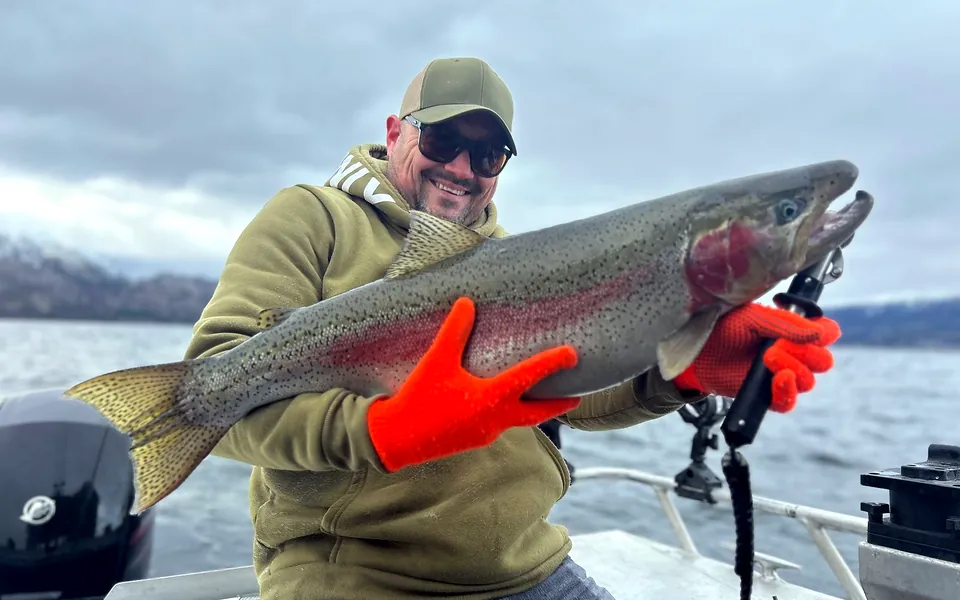
Photograph of a Rainbow trout

Native · Oncorhynchus mykiss

Rainbow trout

The fish this whole business is built around.

Recorded by Clemens in 1954 as the Kamloops trout, and still the reason people book a boat here. Cold, deep water and an abundant supply of kokanee let these fish grow to sizes most anglers do not associate with a rainbow. This is what we hunt with a bucktail from October through April.

Photo: Okanagan Bucktail Co.

Status
The signature fish
Size
Double digits realistic, over 20 lb possible
When
October to April for the big ones
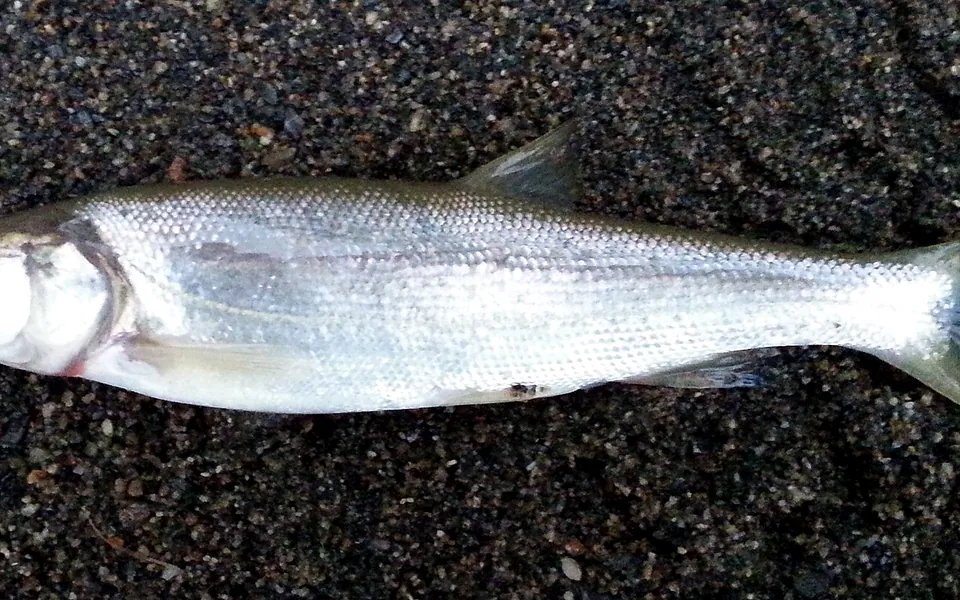
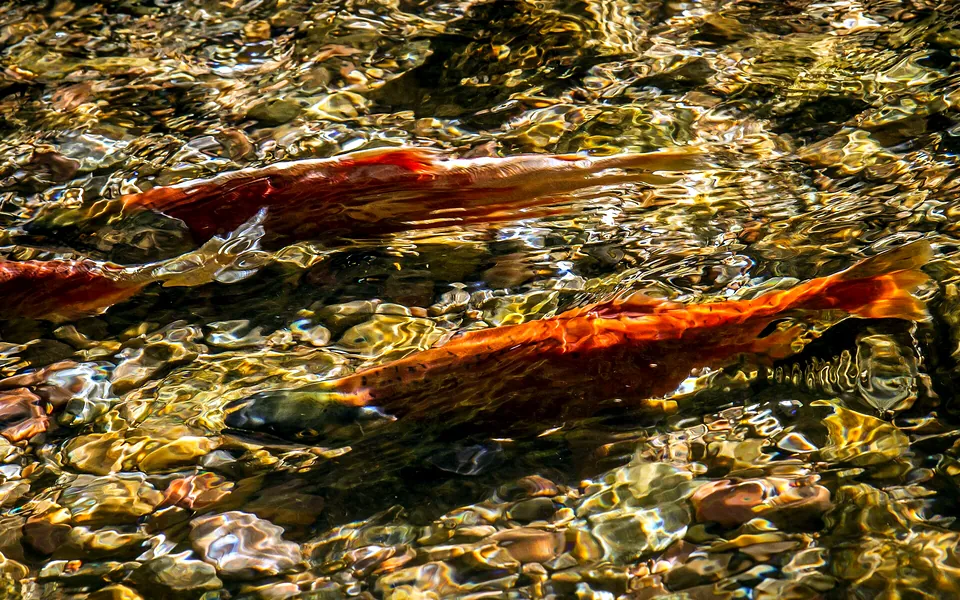
Photograph of a Kokanee

Native · Oncorhynchus nerka

Kokanee

A sockeye salmon that never goes to sea, and the biggest fisheries story in the valley.

Okanagan Lake kokanee numbered over a million in the 1970s. They collapsed, the sport fishery was closed in 1995 to conserve what was left, and shore spawners fell below 10,000 by 1998. Then they came back: 315,240 shore spawners in 2020 and 396,326 in 2021, the strongest counts since the 1970s. They are also the main food supply for the big rainbows.

Photo: Intermountain Forest Service, USDA Region 4

Status
Collapsed, then recovered
Size
Typically 20–35 cm
When
Spawns late summer into autumn
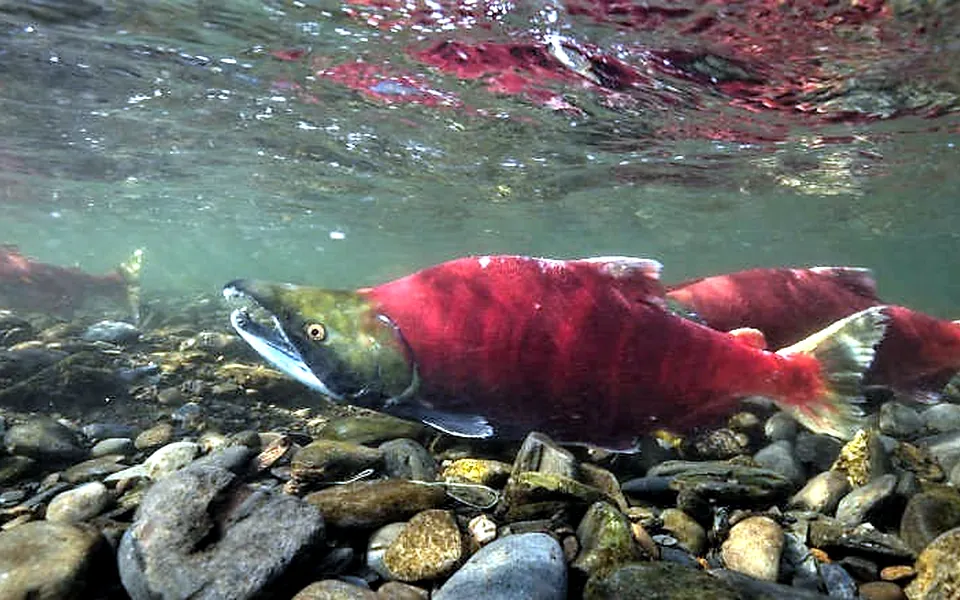
Photograph of a Sockeye salmon

Native, returning · Oncorhynchus nerka

Sockeye salmon

Shut out of this lake for over a hundred years. As of 2025, not any more.

Columbia River dams built in the 1940s and 50s cut sockeye off from Okanagan Lake. On 18 August 2025 a fish passage around the Okanagan Lake dam opened, built by the Syilx Okanagan Nation with the City of Penticton, the Province and Fisheries and Oceans Canada. It reopens roughly 350 square kilometres of lake and 13 tributaries to sockeye, chinook, steelhead, rainbow trout and kokanee for the first time in over a century.

Photo: U.S. Fish & Wildlife Service

Status
Back after more than a century
Size
Sea-run adults, far larger than kokanee
When
Late summer
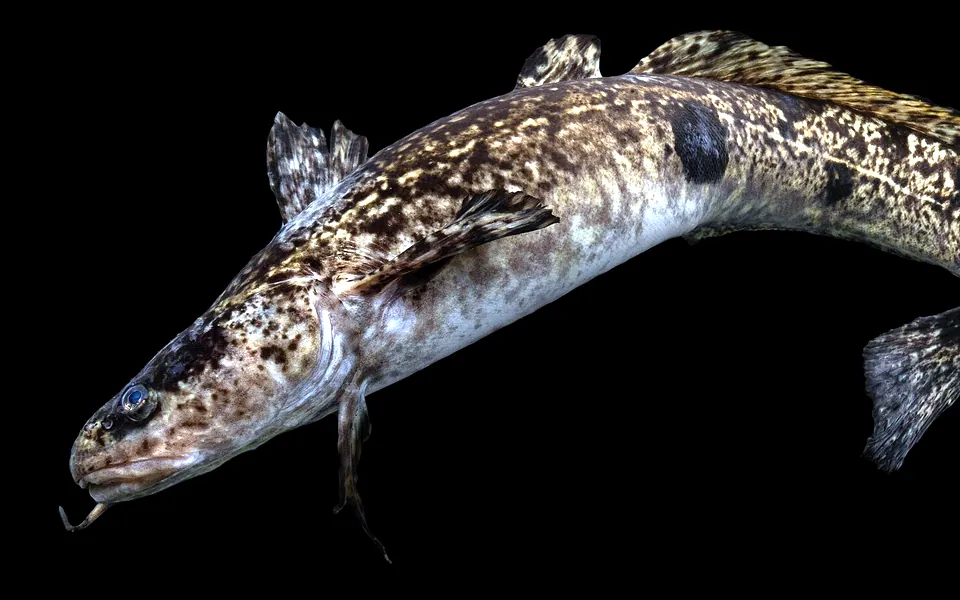
Photograph of a Burbot

Native · Lota lota

Burbot

The only freshwater cod in the country, and it lives here.

Listed by Clemens in 1954 under its old name, ling. Burbot spend the daylight hours deep and feed at night, which is why most anglers on this lake have never seen one despite them being a long-established native species.

Photo: USFWS Mountain-Prairie

Status
Deep and nocturnal
Size
Can exceed 5 kg in big lakes
When
Winter
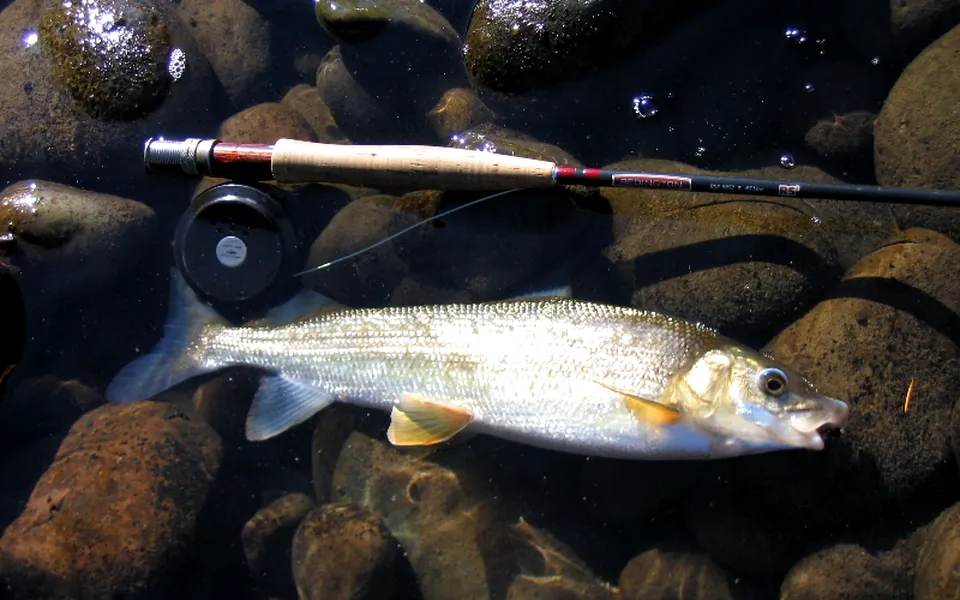
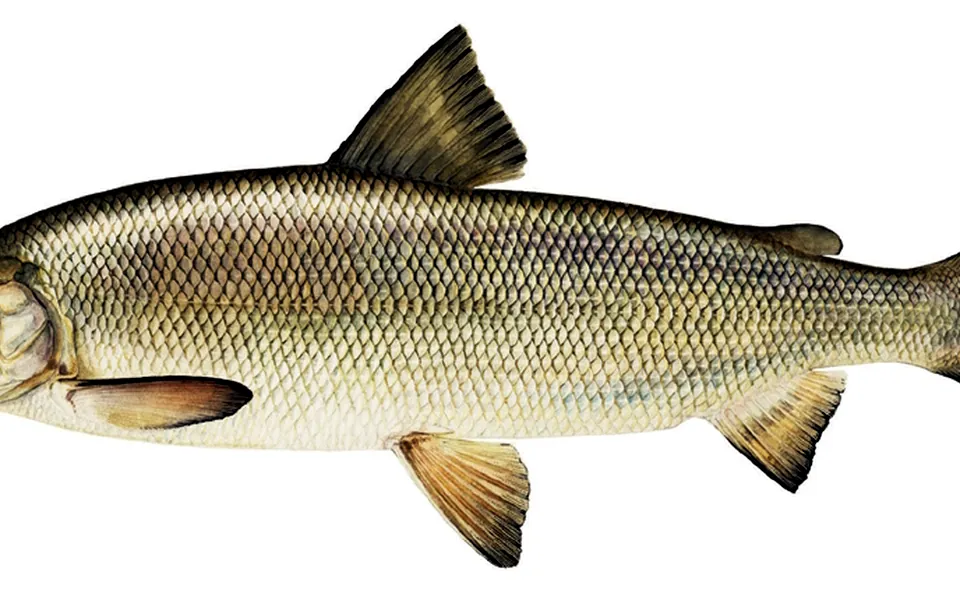
Photograph of a Mountain whitefish

Native · Prosopium williamsoni

Mountain whitefish

Everywhere, and almost nobody targets it.

Recorded by Clemens as the Rocky Mountain whitefish. A native, widespread and genuinely good sport fish that sits in the shadow of the trout.

Photo: Woostermike

Status
Abundant, overlooked
Size
Usually 25–45 cm
When
Year-round
Illustration of a Lake whitefish

Introduced · Coregonus clupeaformis

Lake whitefish

An eastern fish that settled into the valley bottom lakes.

Clemens listed it in 1954 as the eastern whitefish. The BC exotic-species review notes it is established in the large valley-bottom lakes of the Okanagan.

Illustration: Ellen Edmonson and Hugh Chrisp

Status
Established
Size
Grows large in the valley lakes
When
Year-round
Photograph of a Northern pikeminnow

Native · Ptychocheilus oregonensis

Northern pikeminnow

Clemens called it the squawfish. It is a native predator, not a pest.

A large native minnow that eats other fish, including young trout and kokanee. It has been part of this system far longer than any of the introduced species people worry about.

Photo: Tim Loh, CC BY 3.0

Status
The native predator
Size
Commonly over 40 cm
When
Warmer months
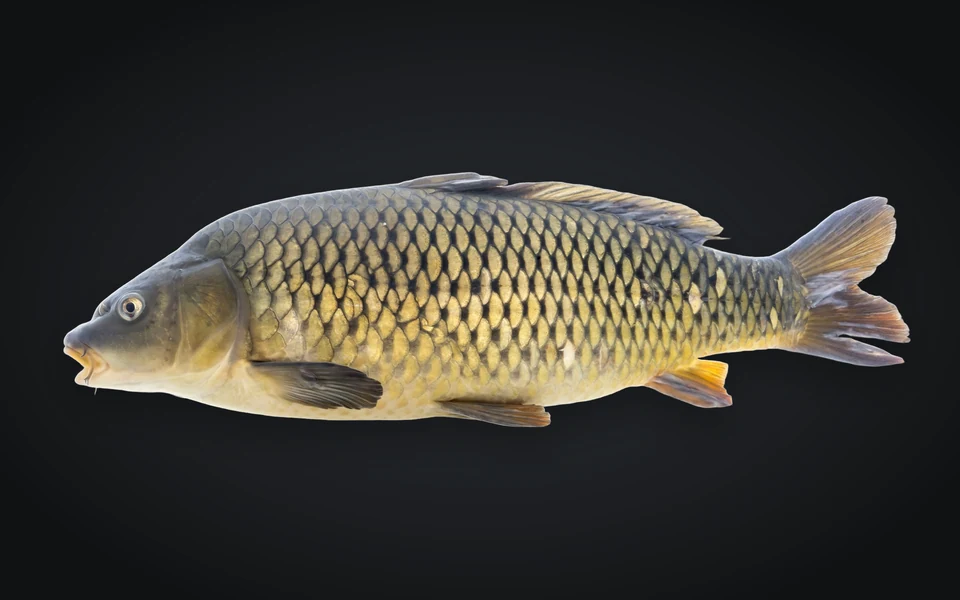
Photograph of a Common carp

Introduced · Cyprinus carpio

Common carp

Arrived from the south under its own steam.

Clemens wrote in 1954 that the carp had come north up the Columbia system in recent years. It is now a fixture of the warm shallow bays, and a genuinely hard fight if you ever hook one.

Photo: USFWS Mountain-Prairie, public domain

Status
Spread up the valley
Size
Frequently very large
When
Summer, in the shallows

1966

The shrimp that changed the lake

In 1966 the opossum shrimp, Mysis, was deliberately introduced to Okanagan Lake, brought over from Kootenay Lake where it had been put in back in 1949. The intention was to give kokanee more to eat.

It did the opposite. Rather than feeding the kokanee, the shrimp competed with kokanee fry for the same zooplankton. Combined with falling phosphorus levels in the lake, which reduced how much life the water could support at all, the kokanee went into a decline that took decades to arrest.

The province rejected both a hatchery fix and lake fertilisation, and settled on shrimp control, habitat protection and stream restoration under the twenty-year Okanagan Lake Action Plan that began in 1996. Mysis have been commercially harvested from the lake every summer since 2000.

It is the single most useful thing to understand about this lake. The reason a twenty pound rainbow is possible here is that it has been eating kokanee, and the reason kokanee numbers swing so hard is a decision made in 1966.

A note on lake trout

A lot of pages about Okanagan Lake list lake trout among the species here. We have left them out on purpose. The provincial review of introduced fish in the Okanagan places their introduction in Kalamalka Lake, and the 1954 baseline survey of Okanagan Lake did not record them. If you have caught one here we would genuinely like to hear about it, because it would be news.

Where this came from

Fish populations move. Figures here are the most recent we could source and are dated in the text. Always check the current BC freshwater regulations before keeping anything.

Common questions

What fish are in Okanagan Lake?

Rainbow trout and kokanee are the two that matter to most anglers. Alongside them the lake holds burbot, mountain whitefish, lake whitefish, northern pikeminnow, peamouth and carp. As of August 2025, sockeye salmon can reach the lake again.

The provincial baseline survey, Clemens in 1954, took fourteen species from Okanagan Lake by gill net and seine. Lake trout are not among them, despite what a lot of websites will tell you.

What is the biggest fish in Okanagan Lake?

For anglers, a rainbow trout. They are known to exceed twenty pounds here. Carp and burbot both grow heavy too, and sturgeon have been reported in the system historically, though not confirmed as a population in the lake.

Are there salmon in Okanagan Lake?

Yes, again. Kokanee are a sockeye salmon that spends its whole life in fresh water and never leaves the lake. Sea-run sockeye were cut off by Columbia River dams built in the 1940s and 50s, and a fish passage opened on 18 August 2025 gives them access to the lake for the first time in more than a century.

Why did the kokanee nearly disappear?

A shrimp called Mysis was introduced in 1966 to feed them and instead competed with their fry for food, at the same time as phosphorus levels in the lake were falling. Numbers went from over a million in the 1970s to fewer than 10,000 shore spawners by 1998, and the sport fishery was closed in 1995.

They have recovered substantially since: 315,240 shore spawners in 2020 and 396,326 in 2021.

Want to meet one of them?

Half day $500, full day $800. Call or text Geoff.

Call Geoff Text Geoff